
Government Job Exam Calendar 2027: How to Plan Your Preparation Year
A government job is rarely won in a few weeks of cramming. It is won across a year of steady, planned preparation.
Most aspirants fail not because they lack ability, but because they lack a plan. They study hard in bursts and drift in between.
A year plan fixes that. It gives every month a purpose and every subject a place in your schedule.
This guide explains how the government exam cycle works and how to build your own 2027 preparation plan around it.
Why You Need a Year Plan
Government exams follow a cycle, not a single date. Notifications, exams and results stretch across many months.
Without a plan, you react to each notification as it arrives. With a plan, you are already prepared when it appears.
A year plan also protects you from burnout. Short, regular study sessions beat long, irregular ones every time.
It also keeps your motivation steady. Small monthly goals give you regular wins instead of one distant target.
Finally, a plan lets you measure progress. You can see what is done, what is pending and what needs more work.
How Government Exam Calendars Are Released
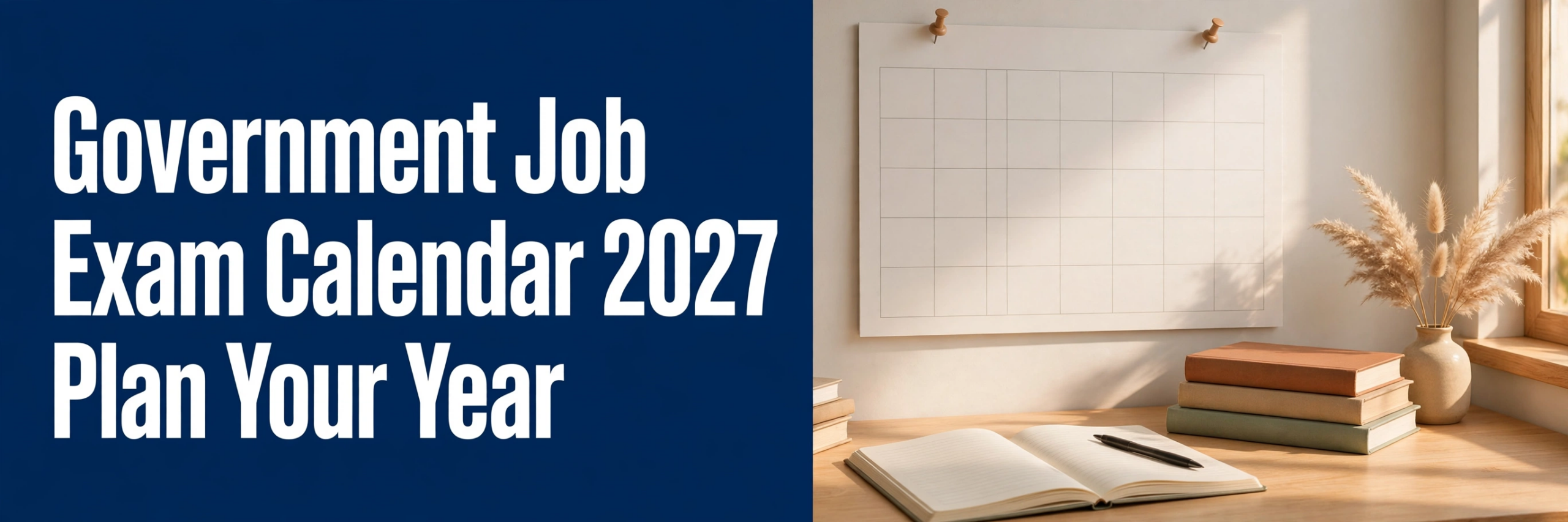
Major recruiting bodies publish an annual exam calendar or a yearly programme of examinations on their official websites.
These calendars usually list the expected months for notifications and exams, along with the names of the examinations.
State commissions and other recruiting bodies follow a similar pattern, though their calendars may arrive at different times of the year.
Remember that these calendars are tentative. Dates can shift, exams can be postponed, and new recruitments can appear without warning.
Always check the official website of the recruiting body for the latest notice. Never rely on a forwarded message or a social media post.
Download the calendar when it is released and keep it as the backbone of your plan. Update it whenever an official change appears.
Some bodies release their calendar early in the year, while others publish it only a few months ahead. Plan around what is available.
A Month-by-Month Planning Framework
The table below is a planning framework, not an official schedule. It shows how a preparation year can be divided into phases.
Adjust the phases to match your own target exams and your current level. A beginner needs a longer foundation phase than a repeater.
| Months | Planning Phase | What to Focus On |
|---|---|---|
| January – February | Foundation | Cover the full syllabus once; build basic notes for every subject. |
| March – April | Strengthening | Revise weak areas; start daily practice questions and short tests. |
| May – June | Practice | Attempt full-length mock tests; analyse every mistake carefully. |
| July – August | Exam Season Focus | Prioritise exams whose notifications are out; revise short notes daily. |
| September – October | Consolidation | Revisit high-weight topics; keep current affairs notes updated. |
| November – December | Review and Reset | Review the year honestly; set targets and a fresh plan for next year. |
Use the framework as a guide, not a rigid rule. Your own exam dates should always decide which phase matters most.
Choosing Which Exams to Target
Do not try to prepare for every exam. A short, realistic target list works far better than a long, hopeful one.
Start with your eligibility: age, education and any other conditions in the official notification.
Next, compare syllabuses. Exams with overlapping subjects let one preparation serve several targets at once.
Rank your targets by priority. Give your first-choice exam the most time and treat the others as supporting options.
Be honest about your level. If your basics are weak, pick exams whose syllabus you can realistically finish in the time available.
Review your target list every three months. Drop exams that no longer fit and add new ones that match your progress.
Building Revision Cycles Into Your Year
Reading a topic once is not enough. Without revision, most of what you study fades within weeks.
Plan at least three revision cycles for every subject. The first can be slow and detailed; later ones should be quick.
Keep short notes for revision. A few pages per subject are far more useful than a thick notebook you never reopen.
Schedule revision in weekly blocks. For example, reserve one day each week only for revising what you studied earlier.
Use mock tests as revision too. A test reveals gaps faster than re-reading, and it trains you for the real exam hall.
When Dates Change or Clash
Exam dates change often, and two exams can fall on the same day. Do not panic when this happens.
First, confirm the change from the official website. Rumours spread fast, and acting on a rumour wastes precious days.
If two exams clash, choose the one that matters more to you. Prepare fully for it and let the other one go without regret.
If an exam is postponed, treat the extra time as a gift. Use it for a full revision cycle, not for starting a new subject.
Keep a simple tracker of every target exam: notification status, exam date, admit card date and result status.
A tracker also stops last-minute surprises. You will always know which exam needs attention next.
Finally, stay flexible. A good plan bends when dates move; a rigid plan breaks.
Related Government Jobs
How to Prepare for Government Job Exams: A Beginner’s Study Plan
How to Apply Online for Government Jobs in India: Step-by-Step Guide
How to Read a Government Job Notification Without Missing Anything

Suraj is a career content writer at SrJobHut, covering government jobs, private jobs, internships, and recruitment updates. He focuses on providing clear, useful, and easy-to-understand information to help job seekers explore career opportunities.