


What to Do After Selection: Joining Formalities, Medical Test and Training
What Happens After You Are Selected
Selection is only the halfway mark. After the final result, a new process begins before you can actually start work.
Most departments follow the same broad sequence. The exact order can vary, but the stages below apply to nearly every government job.
Knowing what comes next saves you from panic and missed deadlines. This guide walks you through each step in plain language.
Your Appointment Letter
The appointment letter is the first official document you receive after selection. It confirms your post, pay level and joining date.
Read it carefully the moment it arrives. Check your name, post name, pay scale and the reporting address for errors.
It will also list the documents you must carry on the joining day. Keep the letter safe, and carry both the original and a photocopy.
Some departments send the letter by post, others by email or through their portal. Check all three regularly after the result.
If the letter does not arrive within a few weeks, contact the department’s recruitment cell. Do not assume it was lost.
Document Verification After Selection
Selected candidates usually face a final document verification before joining. This is separate from any verification done before the exam.
Officials compare your original certificates with the details in your application form. Every entry must match exactly.
Your educational certificates, caste or category certificate, age proof and identity proof are checked first. Experience certificates follow if the post required them.
A small mismatch, such as a spelling difference in your name, can delay joining. Get such errors corrected as early as possible.
Carry originals plus two sets of self-attested photocopies. Departments rarely accept a document shown only on a phone screen.
Police Verification and Character Verification
Many government posts require police verification before or soon after joining. The department sends your details to the local police.
The police check for pending criminal cases and confirm your residential address. A constable may visit your home for this.
You may need to submit a character certificate from a gazetted officer or your last educational institution. Keep one ready in advance.
A minor traffic challan normally does not affect selection. A pending criminal case, however, can lead to serious complications.
If verification is still pending on your joining date, departments often allow provisional joining. The appointment is then confirmed after a clean report.
The Medical Fitness Test
Almost every government job requires a medical fitness test before joining. It is conducted at a government hospital or a designated medical board.
The test usually covers eyesight, hearing, blood pressure, blood sugar and a general physical examination. Some posts add a chest X-ray or urine test.
Posts with physical standards, such as police or defence roles, have stricter tests. These may include height, weight, chest measurement and running.
Common reasons for a temporary rejection are high blood pressure, poor eyesight or an untreated infection. Most of these can be corrected.
If you are declared temporarily unfit, you are usually given time for treatment and a re-test. A permanent rejection is rare and applies to serious conditions.
Before the test, sleep well, avoid alcohol and carry your appointment letter and identity proof. Do not hide any medical condition from the doctor.
Joining Formalities
On the joining day, report to the office mentioned in your appointment letter. Reach early, because the formalities take several hours.
You will fill in joining forms, submit your documents and sign the joining report. The office then issues your employee identity card.
Some departments ask you to open a salary account with a specified bank. Carry your PAN card, Aadhaar card and passport-size photographs for this.
The reporting deadline in your letter is strict. Missing it without permission can be treated as refusal of the appointment.
If a genuine problem prevents you from joining on time, write to the department immediately. Ask for an extension in writing and keep a copy.
Joining-Day Documents Checklist
| Document | Original | Photocopies |
|---|---|---|
| Appointment letter | Yes | 2 sets |
| Identity proof (Aadhaar / PAN) | Yes | 2 sets |
| Educational certificates and mark sheets | Yes | 2 sets |
| Caste / category certificate (if applicable) | Yes | 2 sets |
| Birth certificate or Class 10 certificate | Yes | 2 sets |
| Character certificate | Yes | 2 sets |
| Medical fitness certificate | Yes | 2 sets |
| Passport-size photographs | — | 8–10 copies |
| Relieving letter (if already employed) | Yes | 2 sets |
| Bank passbook or cancelled cheque | Yes | 1 set |
Tick off each item the night before joining. A missing document on the day causes delays that are easy to avoid.
Probation and Training
Most government jobs begin with a probation period, usually one to two years. During this time your work and conduct are closely observed.
Probation is not a formality. Poor performance or misconduct during probation can lead to termination or an extension of the period.
Many departments start with induction training. This covers office rules, departmental procedures and the basics of your new role.
Some posts require residential training at a training academy. This can last from a few weeks to over a year, depending on the post.
Certain posts also involve a bond or service agreement. This means you agree to serve for a fixed period or repay the training cost if you leave early.
Read any bond document carefully before signing it. Note the bond period, the amount involved and the conditions under which it applies.
During training, ask questions and build good relations with your batchmates and trainers. These contacts help throughout your career.
First Salary and Allowances
Your first salary usually arrives at the end of your first full month of service. It may take an extra month if your joining formalities are delayed.
The salary includes basic pay plus allowances such as Dearness Allowance, House Rent Allowance and Transport Allowance, as applicable to your post.
Some allowances start only after probation or after you complete training. Check your appointment letter to see which apply from day one.
Your salary account, PAN and other details must be correctly recorded in the office. Any error here delays your first payment.
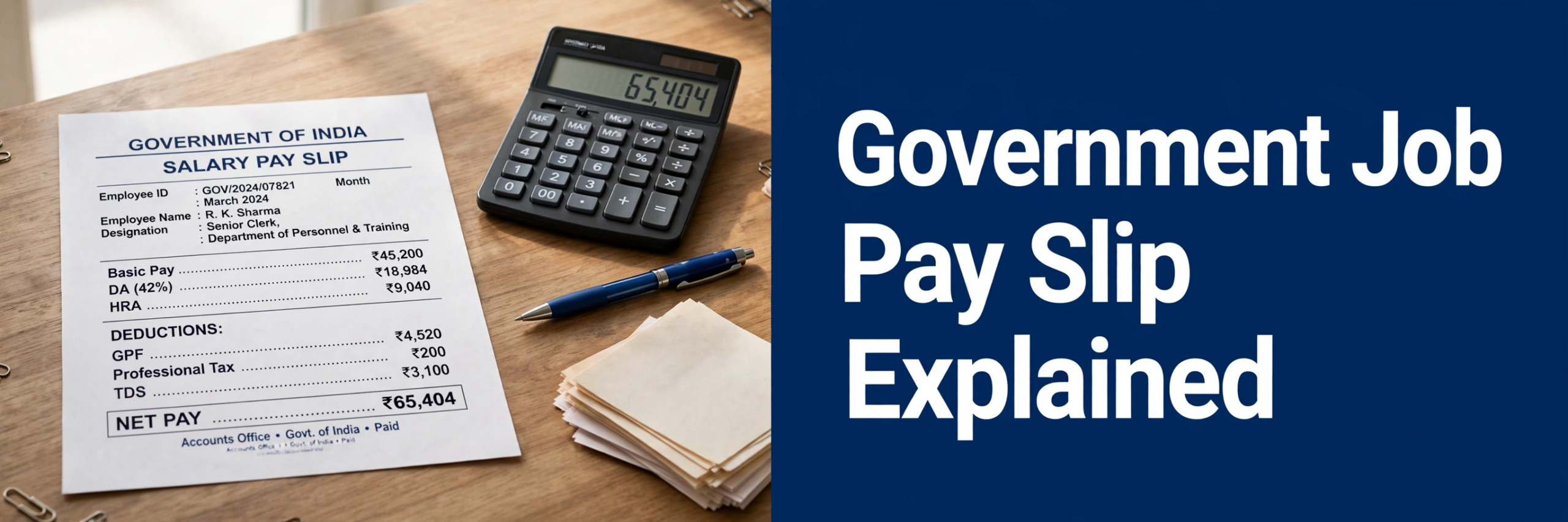
Keep your first pay slip safe. It is useful for loans, income proof and future service records.
If Something Goes Wrong
A name mismatch between documents is the most common problem. Get it corrected through an affidavit or the issuing authority, and inform the department in writing.
If a document is pending, such as a final degree certificate, submit a provisional certificate with a written undertaking. Most departments accept this temporarily.
If you fail the medical test, ask for the written reason and the re-test procedure. Treat the condition and appear for the re-test on the given date.
If your police verification is delayed, follow up politely with the local police station. Keep the department informed so your joining is not held up.
If you receive a show-cause notice for any discrepancy, reply within the given time. A calm, factual reply with supporting documents works best.
Never pay anyone who promises to speed up your joining. All post-selection formalities are free, and such demands should be reported.
When in doubt, write to the department instead of relying on rumours. A written query creates a record that protects you later.
Related Government Jobs
- What Is Document Verification in Government Jobs and How to Prepare
- Government Job Salary, Allowances and Perks Explained: Pay Levels, DA, HRA and Pension
- How to Prepare for Government Job Interviews: Questions, Dress Code and Confidence
- Government Job Probation Period: Rules, Confirmation and Common Mistakes

Suraj is a career content writer at SrJobHut, covering government jobs, private jobs, internships, and recruitment updates. He focuses on providing clear, useful, and easy-to-understand information to help job seekers explore career opportunities.





1 thought on “What to Do After Selection: Joining Formalities, Medical Test and Training”