

Every government job notification fixes an upper age limit for applicants. Many candidates, however, are allowed extra years beyond that limit.
This extra allowance is called age relaxation. It can decide whether you are eligible to apply at all.
This guide explains the standard age relaxation rules in plain language. It covers SC, ST, OBC, EWS and PwBD candidates, plus ex-servicemen and government servants.
What Is Age Relaxation?
Age relaxation is an increase in the maximum age allowed for a government job. It applies only to candidates in specified categories.
For example, if a post allows candidates up to 30 years, a relaxed candidate may apply at 33 or 35. The exact increase depends on the category.
Relaxation applies to the upper age limit only. It never changes the minimum age, the educational qualification, or the selection process.
Each recruitment notification states its own relaxation rules. The notification is the final authority for that particular recruitment.
Why Does Age Relaxation Exist?
Age relaxation exists to give a fair chance to candidates who start at a disadvantage. Social and economic barriers can delay education and career entry.
Reservation policy in government recruitment therefore includes age concessions along with reserved vacancies. The aim is wider participation, not lower standards.
Persons with benchmark disabilities face additional barriers in education and employment. Their relaxation is therefore larger than the category-based relaxations.
Ex-servicemen also receive relaxation in recognition of years spent in military service. Government servants get concessions for their years of service too.
Standard Age Relaxation in Central Government Recruitment
The relaxations below are the ones commonly applicable in central government recruitment. Individual notifications may vary, so always check the advertisement.
| Category | Usual Age Relaxation |
|---|---|
| SC / ST | 5 years |
| OBC (Non-Creamy Layer) | 3 years |
| PwBD (Persons with Benchmark Disabilities) | 10 years |
| PwBD belonging to SC / ST | 15 years |
| PwBD belonging to OBC (Non-Creamy Layer) | 13 years |
| Ex-Servicemen | As per rules, linked to years of service |
| Central Government Servants | Up to 5 years (varies by post) |
| EWS | No age relaxation |
The PwBD relaxation of 10 years applies over and above the category relaxation. That is how SC/ST PwBD candidates reach 15 years and OBC PwBD candidates reach 13 years.
Relaxations are cumulative only where the rules allow it. A candidate cannot simply add every relaxation together unless the notification says so.
Ex-servicemen get relaxation based on their length of military service. The exact formula is fixed in each notification and in the service rules.
Government servants in regular service may get up to 5 years of relaxation for many posts. Some posts, especially higher-level ones, allow a longer concession.
State government recruitments follow their own rules, which are often similar but not identical. Always read the state notification separately.
EWS Candidates: No Age Relaxation
EWS stands for Economically Weaker Sections. It is a reservation of 10% of vacancies for candidates from economically weaker general-category families.
EWS reservation applies to vacancies only. It does not carry any age relaxation, unlike SC, ST and OBC reservation.
An EWS candidate must therefore meet the same upper age limit as a general-category candidate. The EWS certificate helps only in the vacancy quota.
This is a common point of confusion. Many EWS candidates assume they get 3 or 5 extra years, but they do not.
How Age Relaxation Is Calculated
Relaxation is calculated on the upper age limit as on the cut-off date given in the notification. That date is usually the closing date for applications.
Your age on that cut-off date decides your eligibility. Your age on the exam date or the result date does not matter.
For example, if the limit is 30 years and the cut-off date is 1 August, your age on 1 August is checked. Even one day over the limit can disqualify you.
Always work out your age on the notified cut-off date before applying. Do not guess from your birth year alone.
Quick Checklist Before You Apply
- Note the upper age limit and the cut-off date in the notification.
- Calculate your exact age on that cut-off date.
- Check the relaxation allowed for your category.
- Confirm that your certificate is valid and in the right format.
- Apply only if your relaxed age limit covers your age.
Certificates Required for Age Relaxation
A relaxation claim is valid only with a proper certificate. A self-declaration is not enough in most recruitments.
SC/ST candidates need a caste certificate issued by the competent authority. OBC candidates need a Non-Creamy Layer certificate in the prescribed format.
The OBC certificate must usually be recent, often issued within a period fixed by the notification. An old certificate may be rejected.
PwBD candidates need a disability certificate from the notified medical authority. It must state the percentage and type of disability.
EWS candidates need an income and asset certificate for the relevant financial year. It proves eligibility for the EWS quota, not for age relaxation.
Ex-servicemen need their discharge certificate or service record. Government servants need proof of regular service and a no-objection certificate where required.
Keep both originals and attested copies ready before the document verification stage. Last-minute certificate work causes avoidable failures.
Common Mistakes to Avoid
The most common mistake is claiming relaxation without a valid certificate. The claim is rejected at document verification, and the candidature is cancelled.
Another mistake is using the wrong certificate format. State-format caste certificates are sometimes rejected when a central format is required.
Some candidates apply under OBC with a creamy-layer certificate, which is not accepted. Only Non-Creamy Layer OBC candidates get reservation and relaxation.
Many candidates also miscalculate their age by using the wrong cut-off date. They check their age today instead of on the notified date.
Some EWS candidates claim age relaxation that does not exist for their category. They then face rejection at the verification stage.
Finally, do not assume that relaxations from two categories can be added together. Check the notification for the exact cumulative rule.
Key Points to Remember
Age relaxation is a real advantage, but it is strictly rule-based. The notification of each recruitment fixes what applies.
SC/ST candidates usually get 5 years, OBC-NCL candidates 3 years, and PwBD candidates 10 years. EWS candidates get no age relaxation.
Your age is always checked on the notification’s cut-off date. Your certificate must be valid, current and in the prescribed format.
When in doubt, read the official notification carefully or contact the recruiting body’s helpdesk. Never rely on rumours or social media posts.
Related Government Jobs
- How to Apply Online for Government Jobs in India: Step-by-Step Guide
- Documents Required for Government Job Applications: Complete Checklist
- What Is a Merit List and Cut Off in Government Recruitment?
- SSC, UPSC, RRB, IBPS: Difference Between Major Recruiting Bodies
- Reservation in Government Jobs Explained: Categories, Certificates and Rules
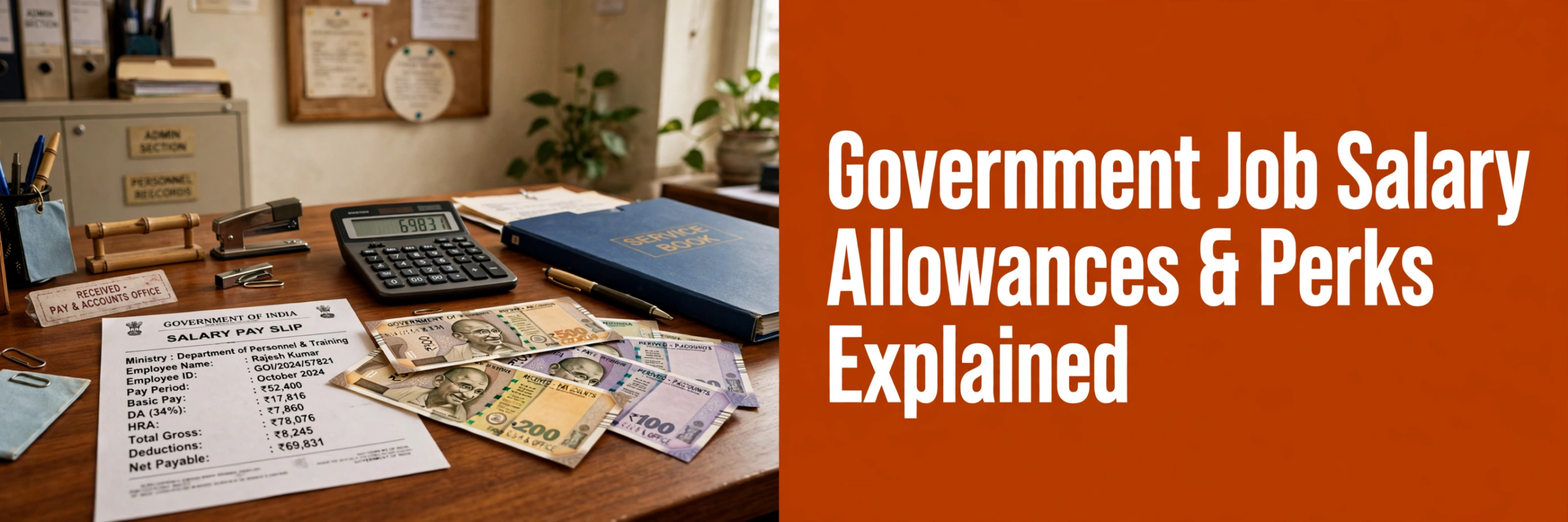
- Government Job Salary, Allowances and Perks Explained: Pay Levels, DA, HRA and Pension

Suraj is a career content writer at SrJobHut, covering government jobs, private jobs, internships, and recruitment updates. He focuses on providing clear, useful, and easy-to-understand information to help job seekers explore career opportunities.




3 thoughts on “Government Job Age Relaxation Rules: SC, ST, OBC, EWS and PwBD Explained”